.svg)
.svg)

What Happens in a Boiler Service? Full Safety Checklist
A clear, step‑by‑step look at what your Gas Safe engineer checks during a boiler service.

Knowing exactly what happens during a boiler service can take the worry out of the process. When you understand the thorough checks your Gas Safe engineer carries out, you’ll see the real value in the service. This knowledge helps you protect your boiler’s warranty, ensures your heating system runs efficiently, and most importantly, gives you peace of mind that your home is safe from risks like carbon monoxide leaks. Being informed allows you to ask the right questions and feel confident that your boiler is in expert hands.
What your Gas Safe engineer checks from start to finish
A proper boiler service is a structured safety and performance check, not just a quick look and a stamp. Your engineer should follow a clear sequence, starting with basic safety and moving into more detailed inspections where accessible.
Initial visual inspection and safety overview
The appointment usually begins with a visual check of the boiler and surrounding area. The engineer looks for signs of distress such as staining, corrosion, water leaks or damaged casing, as well as any obvious installation issues.
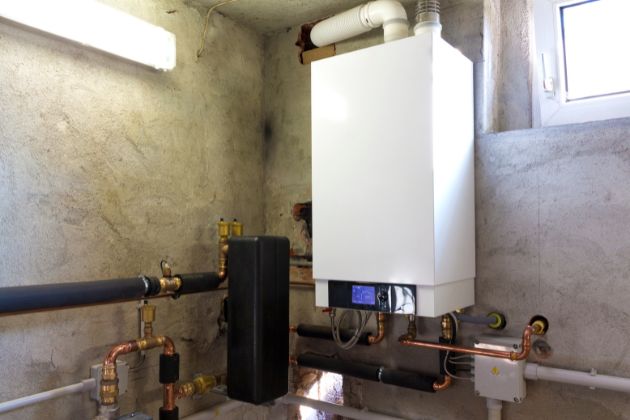
They also assess the overall setup: pipework, isolation valves, electrical spur, and whether the boiler location is sensible and safe. Any previous warning stickers or notes are checked and discussed with you.
Ventilation, flue route and carbon monoxide safety
Safe removal of combustion gases is critical for preventing carbon monoxide entering your home. The engineer checks the flue route from the boiler to the terminal outside, looking for damage, loose joints, poor support or signs of leakage.
If the boiler needs ventilation, the air vents and surrounding space are inspected to confirm they are not blocked. The flue terminal outside is checked for obstructions such as foliage, carports or clutter that could affect safe operation.
- Flue joints, brackets and terminal condition
- Clearances around the boiler and any required vents
- Signs of scorching, soot or discolouration near the boiler
- Any carbon monoxide alarms present and their placement
This is a key part of protecting your household from carbon monoxide, which is odourless and colourless. A service helps confirm your boiler is burning gas cleanly and expelling fumes properly.
Gas tightness testing and combustion analysis
Where appropriate, your engineer will carry out gas tightness checks to confirm there are no leaks on the installation. This is usually done at the gas meter using calibrated equipment and recorded for your records.
On modern boilers, a flue gas analyser is typically used to measure combustion quality. A small test point on the flue or boiler allows the engineer to check levels of oxygen, carbon monoxide and carbon dioxide against manufacturer guidelines.
If readings are out of range, the engineer may adjust the gas valve or recommend remedial work. Any unsafe conditions are always prioritised and clearly explained.
Internal inspection: burner, seals and heat exchanger
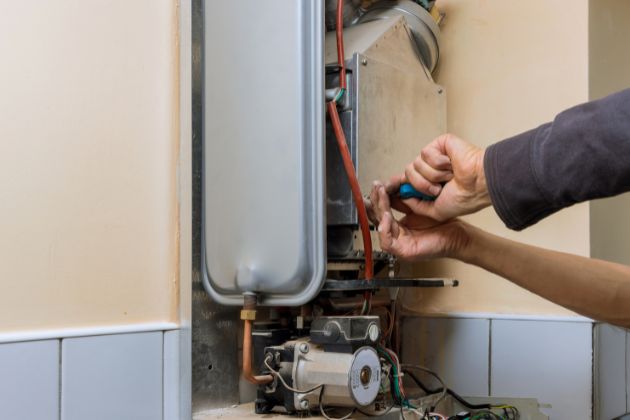
Where safe and accessible, the boiler casing is removed to inspect internal components. Seals around the combustion chamber are checked for wear, damage or signs of leakage that could allow products of combustion into the property.
The burner and heat exchanger are examined for soot, debris or corrosion. Depending on the boiler type and condition, a light clean may be carried out following manufacturer instructions. The condensate trap is inspected and cleaned as needed to keep waste water flowing freely.
Any signs of overheating, such as scorch marks or warped parts, are noted. These visual clues help pick up early issues before they become failures.
Safety devices, pressures and system health
Your boiler has several built-in safety devices designed to shut it down if something is wrong. During a service, these are tested where practical, including overheat stats, flame detection, pressure switches and safety valves.
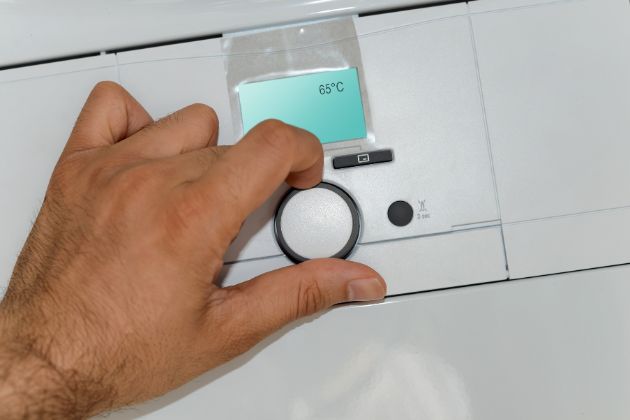
The engineer checks the system water pressure, usually on the pressure gauge at the boiler. On sealed systems, the expansion vessel is assessed and recharged if possible to help prevent frequent pressure loss or relief valve discharge.
They also check for leaks on visible pipework and around joints, and look at the condensate pipe routing to make sure it is adequately protected from freezing.
Controls, thermostats and overall operation
A boiler service is also a good time to confirm your heating controls are working as intended. The engineer will usually run the boiler through demand from the programmer, room thermostat and cylinder thermostat if you have a hot water cylinder.
They check that the boiler fires correctly, modulates as expected and shuts down cleanly. Radiators may be briefly checked to ensure they are warming, although a full system balance is a separate job.
Basic settings are reviewed against your usage. If you have smart controls, you can ask about optimising timings and temperatures to save energy.
Preparing your home for a smooth boiler service
A little preparation makes your appointment quicker, safer and more productive. It also means your engineer can spend more time on the actual checks rather than moving furniture or hunting for information.
- Clear access to the boiler, airing cupboard and hot water cylinder
- Know where your stopcock and gas meter / emergency control valve are
- Know where your consumer unit (fuse box) is located
- Have the boiler manual or any previous service records handy
- Make a note of any intermittent faults, noises or error codes
If you have pets, consider keeping them in another room while the engineer is working. Make sure someone over 18 is at home to discuss any findings and confirm decisions about repairs if required.
Paperwork, warranty protection and landlord duties
At the end of the visit, your engineer should talk you through what they have done and any issues found. You will usually receive a service record or report that notes key checks, test results and recommendations.
For boilers under manufacturer warranty, an annual service carried out by a Gas Safe engineer is often a condition of keeping that warranty valid. Keeping your records together makes any future warranty claim much easier.
Additional notes for landlords
If you are a landlord, you have legal responsibilities for gas safety in your rental properties. A yearly gas safety check and certificate are mandatory, and many landlords choose to combine this with the boiler service for efficiency.
Always use a Gas Safe registered engineer and keep copies of service records and gas safety certificates. Tenants should be given current documentation and told how to report any issues promptly.
After the service: what to do next
Once your boiler is serviced, take a moment to read through the report. Any advisory notes are worth addressing sooner rather than later, especially if they relate to safety or parts that are wearing.
Ask your engineer when they recommend your next service, usually in 12 months. Many homeowners find it easiest to set a reminder or join a service plan so the date is not forgotten.
Between services, you can help your system by bleeding radiators that have cold tops and keeping furniture away from radiators to let heat circulate. If you notice new noises, frequent pressure loss or recurring error codes, arrange a check rather than waiting for the next annual visit.
Book expert boiler servicing in Bristol
Regular servicing is one of the simplest ways to keep your boiler safe, efficient and compliant with warranty and landlord obligations. If you are in Bristol or the surrounding areas, Heat Excel Ltd can arrange Gas Safe boiler servicing at a time that suits you.
You will be talked through the checks in plain English, with clear, honest advice and no pressure for unnecessary work. You can also explore ongoing service plans to spread the cost of future checks and give yourself extra peace of mind.
To book your boiler service in Bristol and nearby areas, or to ask about our main boiler servicing options and service plans, contact Heat Excel Ltd on 01934784046. An engineer will be happy to explain the process and answer any specific questions you have about your boiler.