.svg)
.svg)
Boiler Kettling Noise: What It Means & When to Call
Boiler sounding like a kettle or banging pipework? Learn what kettling really means & what you can safely check yourself.

If your boiler has started whistling, gurgling, or banging like an old kettle, it’s usually a sign that something isn’t working properly inside the system. These noises, called boiler kettling, happen when limescale or sludge builds up, restricting water flow and causing the water to overheat and steam. While kettling can often be fixed, it shouldn’t be ignored, as it can lead to poor heating, hot water issues, and even damage to your boiler over time. Acting quickly can save you costly repairs and keep your heating running smoothly.
What boiler kettling noise means
Boiler kettling is the name given to loud whistling, rumbling or knocking sounds that happen when water is heated and cannot flow smoothly through the boiler. Instead of a gentle hum, you may hear a sound similar to a boiling kettle or a distant train.
The most common causes of kettling are:
- Limescale on the heat exchanger restricting water flow and causing hotspots
- Restricted circulation due to blocked pipework or clogged radiators
- Faulty or incorrectly set pump affecting water flow rate
- Air trapped in the system creating gurgling and banging
- Sludge build up from rust and debris in radiators and pipes
Alongside the noise, you might notice other symptoms such as poor heating performance, radiators with cold spots, hot water that runs hot and cold, the boiler cutting in and out more often than usual, or fault codes showing on the display.
Safe checks you can do before calling an engineer
There are a few simple checks most homeowners can carry out safely. These will not fix serious issues, but they can help you understand what is going on and give your engineer useful information.
Simple checks that are usually safe
Before you start, always make sure you can access your boiler safely and that you can see the controls clearly. Then:
1. Check the boiler pressure
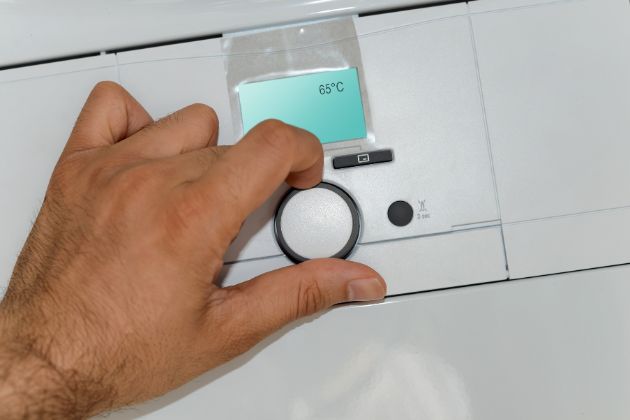
Most modern boilers work best at around 1 to 1.5 bar when the system is cold. Look at the pressure gauge on the front of the boiler. If it is very low or very high, make a note of the reading. Only top up pressure if you are confident using the filling loop and you have your boiler manual to follow.
2. Bleed the radiators if they are partly cold at the top
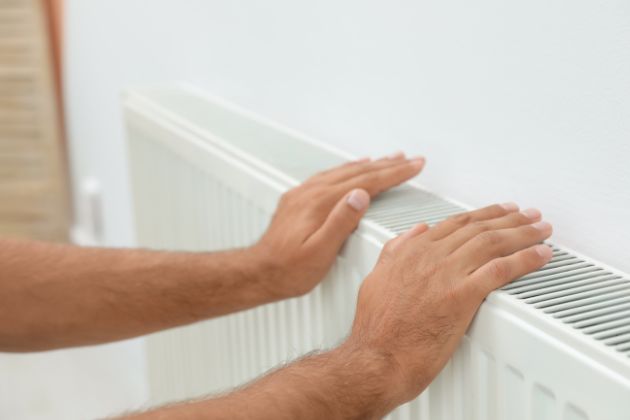
If radiators are hot at the bottom and cold at the top, you may have trapped air. With the heating off and system cool, you can bleed radiators using a radiator key and a cloth. Release air gently until water appears, then close the valve firmly and recheck the boiler pressure afterwards.
3. Check radiator valves are open
Make sure the main valves on your radiators are open, especially in rooms near the boiler. Partially closed valves can restrict flow and make kettling worse.
4. Listen for where the noise is loudest
Carefully listen near the boiler and then near the first few radiators and pipes. Note where the noise is strongest and when it happens, such as only with heating, only with hot water, or both.
5. Note any fault codes or warning lights
Write down any codes shown on the boiler display, including if they come and go. Your engineer can use these to diagnose issues more quickly.
Things you should not try yourself
There are some tasks that are strictly for Gas Safe registered engineers. To stay safe:
- Do not open the boiler casing or touch any internal components
- Do not adjust gas valves, burner settings or fan speeds
- Do not attempt a power flush or add chemicals without proper training
- Do not ignore strong burning smells, soot, or the boiler repeatedly locking out
If the boiler is making very loud banging, smells unusual, or you suspect a gas issue, switch it off and call a professional straight away.
Hard water, limescale and kettling risk
Limescale is one of the biggest contributors to boiler kettling, especially in hard water areas. When hard water is heated, minerals like calcium and magnesium form scale inside the heat exchanger and pipes.
Over time, this limescale layer narrows the waterways and creates hotspots where water boils rapidly. This rapid boiling makes the whistling, rumbling or popping noises you hear as kettling. It can also increase fuel use because the boiler has to work harder to heat your water.
Parts of the South West, including some Severn Trent and Bristol Water supply areas, can have hard or moderately hard water. The easiest way to check is to use your local water supplier's postcode checker or look up a water hardness map online.
In hard water areas, it is especially important to have the correct corrosion inhibitor chemical in the system, and to consider extra protection such as magnetic filters or scale reducers. These help slow scale and sludge build up and keep water flowing freely through the boiler.
Professional fixes for boiler kettling
Once kettling has started, it usually needs a professional to fix the root cause. The right solution will depend on what is found during inspection, but common approaches include:
Chemical clean
A heating engineer may add cleaning chemicals to your system and circulate them to break down sludge, rust and some limescale. This is then flushed out and replaced with fresh water and inhibitor.
Power flush
For heavily contaminated systems, a power flush machine can be connected to push water and chemicals through at high flow rates. This helps clear out deep sludge from radiators and pipework, restoring circulation.
Fitting a magnetic filter
Magnetic filters are installed on the heating return pipe near the boiler. They capture metal particles as water flows through, preventing sludge forming and protecting your boiler long term.
Servicing and part replacement
A full boiler service includes cleaning key components, checking settings, and making sure the pump and safety devices are working correctly. In some cases, a scaled or damaged heat exchanger or a failing pump may need replacing to fully resolve kettling.
Can kettling damage my boiler?
Kettling can shorten the life of your boiler if it is left untreated. Constant overheating, rapid boiling and poor flow put extra stress on the heat exchanger and other components.
In the short term, modern boilers have safety features that shut the boiler down if it gets too hot. In the long term, though, repeated stress can lead to leaks, cracks or complete boiler failure, which is far more expensive to put right than an early repair and clean.
Is kettling dangerous?
Kettling noises themselves are usually a sign of internal problems rather than an immediate safety threat. However, any boiler that is not working properly should be taken seriously.
If you ever smell gas, see sooting, feel unwell when the boiler is on, or have concerns about carbon monoxide, switch the boiler off, ventilate the area and seek immediate help. For noise alone without other worrying symptoms, arrange a prompt repair visit rather than ignoring it.
Will boiler kettling go away on its own?
Once kettling starts, it rarely goes away by itself. In most cases it steadily gets worse as more limescale or sludge builds up, or as a failing pump becomes less effective.
Bleeding radiators or adjusting room thermostats might make a small difference to how the noise sounds, but the underlying cause will still be there. Early intervention usually means a simpler fix, less disruption and lower gas bills, so it is always better to act sooner rather than later.
Next steps and when to call Heat Excel Limited
If you have tried the safe checks above and your boiler is still kettling, it is time to bring in an expert. A qualified engineer can test water quality, check your pump and heat exchanger, and recommend the right combination of cleaning, filtration and servicing.
To protect your boiler over the long term, regular servicing and a good service plan are just as important as the initial repair. If kettling persists or you are worried about any noises from your heating, contact Heat Excel Limited on 01934784046 to book a boiler repair and ask about boiler servicing and annual service plans. You can also visit our pages on boiler repairs, boiler servicing and service plans to learn more.