.svg)
.svg)

Boiler Losing Pressure: Causes, Safe Checks & Fixes
Boiler pressure always dropping? Learn what the gauge should read, simple safe checks you can do at home.

If your boiler pressure keeps dropping, it can be worrying, especially on a cold day when you rely on your heating the most. The good news is that many causes are straightforward to identify. Understanding what a normal boiler pressure looks like helps you know what checks you can safely carry out yourself. This knowledge also guides you on when it’s essential to call a Gas Safe engineer to avoid any risks or further damage. With the right approach, you can keep your boiler running efficiently and avoid unexpected breakdowns.
What boiler pressure should be
Most modern combination and system boilers sit around 1 to 1.5 bar when the system is cold. As the heating runs, it is normal for pressure to rise slightly, often up to around 2 bar.
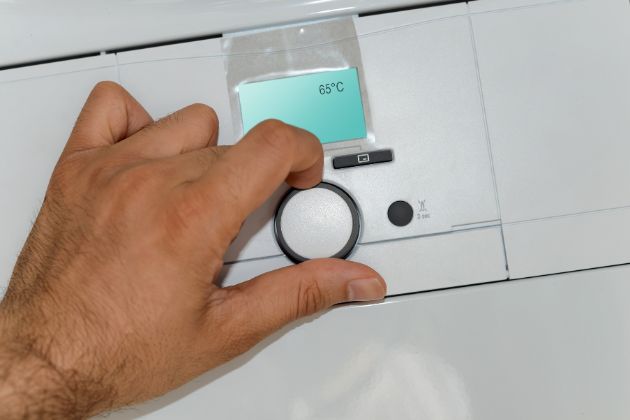
Every boiler is different, so always check your manufacturer’s handbook or the digital display for the recommended range. Some boilers have a green "normal" zone on the gauge to make this easier.
If your pressure is regularly dropping below 1 bar, or you see the gauge hit 3 bar or more, your boiler needs attention. Very low or very high pressure can lead to breakdowns and should not be ignored.
What “topping up” boiler pressure means
"Topping up" or repressurising the boiler means adding water to the central heating system so the pressure returns to the correct range. This is usually done using a filling loop, which is either a flexible silver hose under the boiler or a built-in control on the boiler itself.
Used correctly, topping up is safe, but it should not become a regular habit. If you need to repressurise your boiler more than once every few months, there is likely an underlying problem that needs a professional fix.
Safe checks before you call an engineer
Before you pick up the phone, there are a few simple, safe checks you can carry out. If at any point you feel unsure, stop and contact a Gas Safe registered engineer. Never remove boiler covers or touch sealed components.
Quick checklist for homeowners
- Check the pressure gauge: Note the reading when the system is cold and again when the heating has been on for at least 30 minutes.
- Look for visible leaks: Inspect radiators, valves and visible pipework for drips, rust marks, or damp patches.
- Bleed radiators if needed: Only if you know how to do this safely and can repressurise afterwards.
- Inspect the filling loop: Make sure the valves are fully closed when not topping up.
Checking for radiator and pipework leaks
Walk around your home and look closely at each radiator, particularly around the valve connections and the bleed valve at the top. Stains, flaking paint, or green/white crust on joints can all suggest a slow leak.
Also check any exposed pipework you can see, such as under sinks, around the boiler, and near the hot water cylinder if you have one. In hard water areas like Bristol and North Somerset, limescale can build up on joints and components, eventually allowing water to escape.
Bleeding radiators and its effect on pressure
If your radiators have cold spots at the top, they may have trapped air. Bleeding can improve efficiency, but every time you bleed a radiator you reduce the system pressure slightly.
Only bleed radiators if you are comfortable doing so and know how to top the pressure back up afterwards. Turn the heating off first, allow the system to cool, use a proper radiator key and a cloth, and close the valve as soon as water flows steadily.
Checking the filling loop
Locate your boiler filling loop. On many combi boilers it is a braided silver hose under the boiler with small valves at each end. Built in loops might be a pair of black or blue taps underneath.
Make sure both valves are fully closed when you are not topping up. A slightly open valve can let water in slowly, causing pressure to rise too high, or mask an underlying fault by constantly adding water to the system.
Simple repressurising steps (if your boiler allows it)
If your boiler manual confirms that you can safely repressurise via the filling loop, follow its instructions carefully. As a general outline:
- Turn the boiler off and allow it to cool.
- Attach the filling loop if it is removable, ensuring the connections are tight.
- Open the valves slowly and watch the gauge rise.
- Close both valves when the pressure reaches the recommended cold level, usually around 1 to 1.5 bar.
- Turn the boiler back on and check for normal operation.
If the pressure keeps dropping back down after you repressurise, there is likely a more serious issue and you should not keep topping up indefinitely.
Diagnostic guide: what the pressure behaviour suggests
You can often narrow down the cause of pressure loss by watching how the gauge behaves over time. This is not a replacement for a professional diagnosis, but it can help you explain the issue to an engineer.
Pressure drops quickly after topping up
If the pressure falls within minutes or hours of topping up, there may be a significant leak on the system or inside the boiler. Check for obvious signs of water around the boiler and pipework.
If you see water coming from the copper pipe that exits outside (the pressure relief pipe), turn the boiler off and call an engineer. This can point to issues with the pressure relief valve or expansion vessel, which must only be worked on by a Gas Safe professional.
Pressure drops slowly over days or weeks
A slow but steady drop often suggests a small leak on a radiator, valve, or a joint under floors or in walls. These can be tricky to spot, but damp patches, musty smells, or staining on ceilings can be clues.
In older systems, or in limescale-prone areas such as around Bristol and Weston, components may degrade over time and start to seep. Repeated topping up is not a solution, as it introduces fresh water and oxygen that can encourage corrosion inside the system.
Pressure rises too high when the heating is on
If the pressure shoots up towards 3 bar or more when the heating runs, then drops back when it cools, there may be a problem with the expansion vessel or the pressure relief valve. You might also hear the pressure relief pipe dripping outside when the boiler is hot.
These parts are safety components and must not be adjusted by anyone who is not qualified. Contact a Gas Safe registered engineer to test and repair them.
When you should stop and call an engineer
You should arrange professional help as soon as possible if any of the following apply:
You need to top up the pressure more than every few months, you can see water leaking from the boiler casing, the boiler repeatedly locks out with low or high pressure faults, or the pressure relief pipe outside is dripping or pouring when the heating is on.
Never remove the boiler’s cover or touch any gas components. All gas work and internal boiler repairs must legally be carried out by a Gas Safe registered engineer.
How regular servicing helps prevent pressure problems
An annual boiler service is one of the best ways to catch pressure-related issues early. During a service, an engineer can test the expansion vessel, check the pressure relief valve, and inspect the system for signs of leaks or corrosion.
In harder water regions like Bristol and North Somerset, yearly servicing also helps spot limescale build-up that can shorten the life of key components. Preventative maintenance is usually far cheaper and less stressful than dealing with breakdowns in winter.
FAQ: common questions about low boiler pressure
Is it safe to use the boiler if the pressure is low?
Most boilers will shut themselves down if pressure is too low to operate safely. If the gauge is just below the recommended range but the boiler is still running, it is usually safe in the short term, but you should address the cause promptly.
If you are in any doubt, or if the boiler is making unusual noises, switch it off and arrange a visit from a Gas Safe engineer.
Will topping up the pressure damage my boiler?
Occasional topping up to the recommended level is normal and should not cause harm. However, frequent repressurising is a sign of a fault and can increase corrosion inside the system over time.
If you are topping up every few weeks or less, it is important to have the system inspected rather than continuing to add water.
Need help with a boiler that keeps losing pressure?
If your boiler pressure will not stay steady, or you are not confident carrying out the checks above, it is time to get expert help. A qualified engineer can test the expansion vessel, pressure relief valve, and track down hidden leaks safely.
Heat Excel Limited provides professional boiler repairs and central heating support in the Bristol and Weston areas. To book a boiler repair or discuss an issue with pressure loss, call Heat Excel Limited on 01934784046, and our friendly team will be happy to help.