.svg)
.svg)

Radiators Not Heating Up? Causes and Safe Fixes
Practical steps to get your radiators warm again, and clear guidance on when to call in a Gas Safe professional.
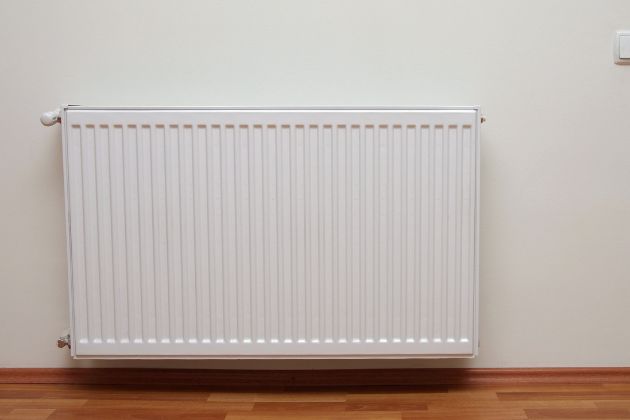
If one or more radiators are not heating up, it can quickly make your whole home feel cold and uncomfortable. Before you rush to book an expensive repair, there are several simple, safe checks you can do yourself. Many common issues can be fixed easily without specialist tools or skills, saving you time and money. This guide will help you pinpoint the problem and decide when to call a Gas Safe engineer.
First safety checks before touching the radiators
Start by making sure the heating is actually on. Check that your room thermostat is set higher than the current room temperature and that your programmer or timer is calling for heating, not just hot water.
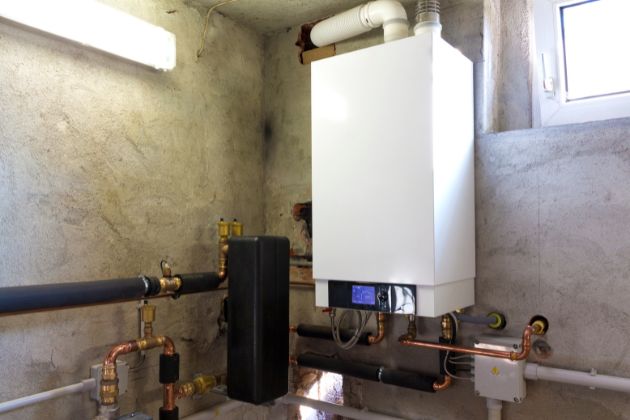
Next, look at your boiler. Is it showing any error codes or flashing warning lights? If it is, note the code, turn the boiler off at the controls, and check the manual or the manufacturer's website. Do not start taking radiators apart until boiler issues are ruled out.
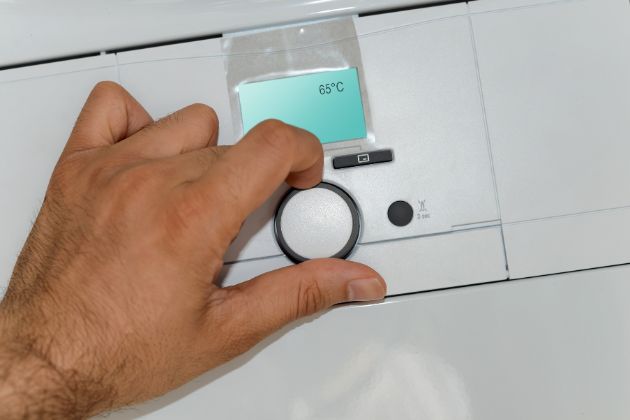
On a sealed system, check the boiler pressure gauge. Most domestic systems sit around 1.0 to 1.5 bar when cold. If the gauge is very low or at zero, your radiators may stop heating properly, and you will usually need a Gas Safe engineer to investigate the cause of pressure loss.
- Confirm the thermostat and timer are calling for heat
- Check the boiler for error codes or warning lights
- Look at the pressure gauge on sealed systems
- Make sure the boiler and main isolator switches are on
One cold radiator vs several cold radiators
If only one radiator is cold while the rest are working, the problem is often local to that radiator. Common culprits include a stuck valve, trapped air or a closed lockshield valve.
If several radiators are cold, especially on one floor or zone, you may be looking at a pump issue, a stuck zone valve, low system pressure or heavy sludge in the system. In this case, your checks need to be more cautious and you are more likely to need a professional.
Most common causes of radiators not heating
Several simple issues can stop a radiator from heating properly. The key is to recognise which ones are safe for a homeowner to tackle and which require a trained engineer.
Air trapped in the radiator
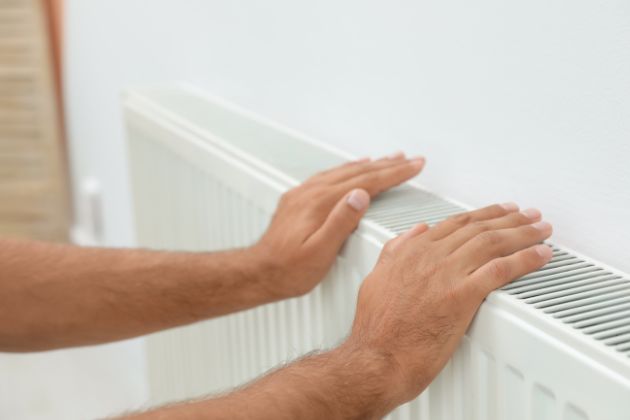
If the top of a radiator is cold but the bottom is hot, there is often air at the top of the panel. This air stops hot water circulating fully and usually causes gurgling or trickling sounds.
Bleeding the radiator is usually safe if you follow basic precautions and know how to re-pressurise a sealed system afterwards. Repeated air build-up, however, should be checked by a professional.
Stuck thermostatic radiator valve (TRV) pin
On radiators with a thermostatic head, the small metal pin underneath can seize in the closed position, especially after summer when the heating has been off. The radiator will then stay cold even when the TRV head is set to maximum.
You can carefully remove the TRV head and gently free the pin with light pressure, but you must not remove any caps or parts that expose water. If the pin will not move, or water starts to seep, stop and call an engineer.
Closed or restricted lockshield valve
The lockshield valve is usually at the other end of the radiator from the TRV and often has a plastic cap or square spindle. If it is fully closed, that radiator will not heat at all.
A small quarter-turn open with an adjustable spanner may restore flow if you suspect it was accidentally closed. Large changes to lockshield positions affect system balance, so if you are unsure, take photos before adjusting or call a professional.
Sludge build-up and balancing issues
Black, dirty water in radiators, or radiators that are hot at the top but cold or patchy at the bottom, often point to sludge. Magnetic debris and corrosion build up over time and restrict flow.
Balancing problems are different. Here, some radiators get very hot while ones further away from the boiler stay lukewarm. This usually needs lockshield adjustments around the whole system and is best handled by someone who understands flow rates and temperature drops.
Pump or zone valve symptoms
If the boiler fires but very few radiators warm up, or only one heating zone works in a multi-zone property, the circulation pump or motorised zone valve may be failing or stuck. You might hear the boiler cycling on and off quickly or humming without much heat reaching the radiators.
Working on pumps and zone valves involves opening the boiler casing or system pipework, which is a job for a Gas Safe engineer. Do not attempt electrical or internal boiler work yourself.
Step-by-step: how to bleed a radiator safely
Bleeding radiators is one of the most useful jobs a homeowner can learn, especially when a radiator is cold at the top. Take your time and protect your home from drips and splashes.
Tools and preparation
You will need a radiator key or a suitable flathead screwdriver, an old towel or cloth, and a small container. For painted walls or carpets, consider using a tray or sheet to catch any spills.
Turn your heating off and wait for the radiators to cool slightly. Bleeding when very hot increases the risk of scalding and can make valves harder to control.
Bleeding the radiator
Place the towel under the bleed valve at the top corner of the radiator. Insert the key and slowly turn anti-clockwise a quarter-turn. You should hear a hissing sound as air escapes.
Keep the valve open until water flows in a steady stream, then turn it back clockwise to close. Do not overtighten. Check for drips and wipe the area clean. If the water is very dark or gritty, that is a sign of sludge and you should speak to a heating engineer.
Checking boiler pressure afterwards
On sealed systems, bleeding radiators can drop the boiler pressure. Once you have finished, check the pressure gauge and top up back to the recommended level, usually around 1.0 to 1.5 bar when cold, using the filling loop if you are confident doing so.
If the pressure keeps dropping after top-ups, or you are not sure how to safely use the filling loop, stop and book a professional visit. Never leave the filling loop open or let pressure rise into the red zone.
Safe troubleshooting vs when to call a professional
It helps to think of radiator issues as a simple decision tree. If the problem is clearly local and you can see or hear the issue, some basic checks are usually fine for a homeowner.
Generally, it is safe to try the following yourself:
- Checking thermostat, timer and boiler controls
- Bleeding a radiator that is cold at the top only
- Gently freeing a stuck TRV pin with the head removed
- Opening a clearly closed lockshield by a small amount
Stop and call a Gas Safe engineer if you notice boiler error codes, repeatedly low pressure, very dirty water, leaks, banging or kettling sounds, or if several radiators are cold and you suspect pump or zone valve faults. Any work that involves opening the boiler casing, altering gas components or dealing with complex electrical controls must be left to a qualified professional.
Professional help for cold radiators and heating faults
If you are in an area such as Bristol or the surrounding regions and your radiators are still not heating properly after basic checks, it is time to get expert help. Cold radiators can be a warning sign of deeper issues that, if ignored, may damage your boiler or pipework.
Heat Excel Limited can diagnose radiator and boiler problems, from stuck valves and balancing issues to pump faults and sludge build-up. For thorough boiler repairs and preventative boiler servicing, our Gas Safe engineers will get your heating working efficiently and safely.
To book boiler repair or heating diagnostics, contact Heat Excel Limited on 01934784046 and speak to our friendly team today.