
.svg)
.svg)

Boiler Fault Codes Explained: What You Can Check Safely
Confused by a boiler error code? Here is what it usually means, what you can check safely, and when it is time to call.
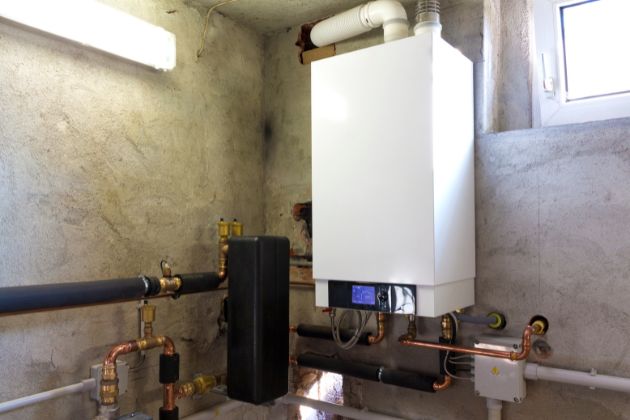
When your boiler suddenly shows a fault code, it can be worrying, especially if you’re left without heating or hot water. These error codes are your boiler’s way of protecting you and preventing damage. Before you call an engineer, there are a few simple, safe checks you can do yourself to try to identify the problem. This can save time and help you explain the issue clearly when you get expert help.
Understanding what boiler fault codes usually indicate
Every manufacturer uses its own numbers and letters, so the same code can mean different things on different models. Rather than memorising codes, it helps to know the main fault areas they usually point to.
In most modern boilers, fault codes tend to relate to a handful of common issues:
- Water pressure problems – low or occasionally high system pressure
- Ignition or flame faults – the boiler cannot light or keep a stable flame
- Overheating or circulation issues – water not moving properly through the system
- Sensor or PCB errors – temperature or pressure readings not making sense
- Flue or air issues – combustion gases not moving as they should
- Condensate problems – condensate pipe blocked or frozen, causing a lockout
The code tells a Gas Safe engineer where to start looking, but you do not need to diagnose it yourself. Instead, focus on a few quick, safe checks and keep good notes.
Finding your boiler model, GC number and manual
Before you do anything else, it helps to know exactly which boiler you have. Engineers and manufacturer helplines will often ask for the model name and GC (Gas Council) number.
You can usually find these:
On the boiler itself – Look for a data sticker or plate on the drop-down flap, behind a front panel, or on the side or bottom of the casing. It typically shows the model name, serial number and a GC number formatted like 47-xxx-xx.
In your paperwork – Check the original installation pack, benchmark log book or service records. The details are often written on the front page.
In the user manual – If you still have the booklet, the model will be printed clearly on the cover and the first pages. If not, you can usually download a copy from the manufacturer’s website using the model name.
How to find your boiler manual online
Go to the boiler manufacturer’s website and look for a section labelled “Literature”, “Downloads” or “Support”. Enter your boiler model name in the search box and select the user manual rather than the installation manual.
The user manual will include a fault code section, basic troubleshooting, and clear guidance on what you are allowed to do yourself. Follow that advice over anything you read elsewhere.
Safe checks you can do before calling an engineer
There are several straightforward checks most homeowners can carry out safely, without removing boiler covers or touching gas components. If you feel unsure at any stage, stop and seek professional help.
Check your system pressure
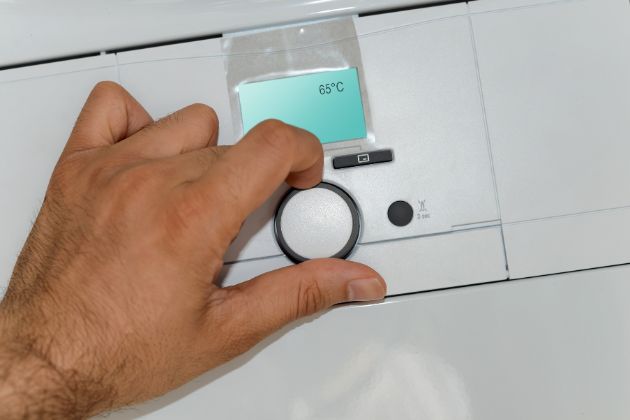
Most combination and sealed system boilers have a pressure gauge on the front. When the system is cold, it usually should sit around 1.0 to 1.5 bar, although your manual will state the exact range.
If the pressure is very low (close to zero), the boiler may lock out with a fault code. You may be able to top it up using the filling loop, following the step-by-step instructions in your user manual. If the pressure keeps dropping, or you are unsure how to top up safely, call a Gas Safe engineer rather than guessing.
Check your controls and settings
Before assuming the boiler is at fault, make sure nothing simple has been overlooked. Confirm that the boiler is switched on at the fused spur, and that any programmer or smart thermostat is actually calling for heat.
Check that room thermostats are turned up above the current room temperature, and that individual radiator valves are open where heat is needed. Incorrect settings can trigger lockouts on some boilers, especially if they detect no demand for a prolonged period.
Look at other gas appliances
If you have a gas hob or another gas appliance, see whether it is working normally. If all gas appliances are out, there could be a supply issue that your gas provider needs to resolve rather than a boiler fault.
If the hob lights but the boiler keeps showing ignition or flame failure codes, the boiler itself probably needs attention from a professional.
Check for obvious leaks or drips
Walk around the boiler and nearby pipework and look for any visible signs of water leaks. Check under the boiler, joints, valves and any exposed pipes you can see safely.
Small leaks can cause ongoing pressure loss, which then triggers pressure-related fault codes. Do not attempt to tighten joints or open the boiler casing yourself. Instead, turn the boiler off and arrange a repair.
Check the condensate pipe for blockages
Most modern condensing boilers have a plastic condensate pipe that takes waste water to a drain. If this becomes blocked, the boiler will lock out and often display a specific code.
Follow the pipe from the bottom of the boiler to where it meets a drain. Look for obvious kinks, disconnections, or visible water overflowing. You can also check that the pipe outlet is not buried in debris at the drain. If you suspect a blockage but cannot clear it safely, contact a Gas Safe registered engineer.
Situations where you must stop and call an expert
Some warning signs mean you should not attempt any further checks. Safety comes first with gas appliances, so take the following extremely seriously.
- Any smell of gas in your home
- Carbon monoxide alarm sounding or showing a warning light
- Boiler locking out repeatedly, even after a reset
- A fault code that returns after one attempted reset
If you smell gas, turn the gas off at the meter if it is safe to do so, open windows and doors, avoid flames or electrical switches, and contact the National Gas Emergency Service immediately. Do not use the boiler again until it has been checked.
For repeated lockouts or persistent fault codes, stop pressing the reset and arrange a repair. Constantly resetting the boiler can mask a developing problem and may cause further damage.
Information to note before you call for a boiler repair
Keeping a few key details to hand will help your engineer diagnose the issue more quickly. Make a note of the following and keep it near the boiler or on your phone.
Boiler fault call template
When you contact a repair company, have this information ready:
1. Boiler make and model: ____________________________
2. GC number (if available): ____________________________
3. Fault code shown on the display: ____________________
4. System pressure reading (bar): _____________________
5. Symptoms you have noticed:
e.g. no heating, no hot water, banging noises, boiler cycling on and off, visible leaks.
6. When it started and whether it is constant or intermittent:
e.g. “Started this morning, happens every time we run hot water.”
Sharing this with your Gas Safe registered engineer, along with anything you checked already, can save time on site and may get your heating back sooner.
Next steps and getting professional help
Boiler fault codes can look technical, but they are really there to keep you safe and protect the appliance. Carrying out simple checks like system pressure, controls, visible leaks and the condensate pipe is often enough to rule out basic problems.
Anything involving gas components, internal wiring, the flue, or covers that need tools to remove must be left to a qualified professional. When you are ready to arrange a boiler repair, ensure you use a Gas Safe registered engineer who is experienced with your type of boiler. You can also ask them to show you how to carry out safe user checks for the future.
If your boiler is showing fault codes and you want it sorted safely and efficiently, contact Heat Excel Limited on 01934784046. Our Gas Safe registered engineers can diagnose the issue, carry out professional boiler repairs, and advise you on safely switching off your boiler if needed before we arrive.
For more guidance on what happens during a repair visit and safe operation of your boiler, see our boiler repairs page and our detailed post on switching off your boiler correctly.
.jpg)